This is a successfull message


This is an Alert Message

This is an Error Message

AI-native engineering intelligence. Connects your SDLC, attributes AI involvement at the code level, reviews that code with a semantic understanding of your codebase, and runs root cause analysis when metrics move.

Engineering intelligence built around metrics, developer surveys, and team-set targets. Detects AI-assisted PRs at the metadata level across Copilot, Cursor, and Claude Code.
Capability | Typo AI | Swarmia |
|---|---|---|
| SDLC Analytics |  | |
| AI Coding Impact & RoI | (code level attribution) | (PR-level metadata detection) |
| AI Code Reviews | |  |
| AI Causal Insights | | |
| Team Productivity Agents | | |
| Developer Experience Surveys | | |
| MCP | | |
| Goals / Working Agreements | | |
| Software Capitalization | Custom | |
| On-premise Deployment | | |
| Security | SOC2 Type II + GDPR | SOC2 Type II + GDPR |

Swarmia detects AI-assisted PRs using a 24-hour proximity heuristic - a useful adoption signal, but the attribution stops at the PR level.
Typo AI attributes AI involvement at the code level & connected directly to cycle time, review time, acceptance rate, and defect rate. You're not just tracking that AI was used. You're proving whether it's being shipped to production

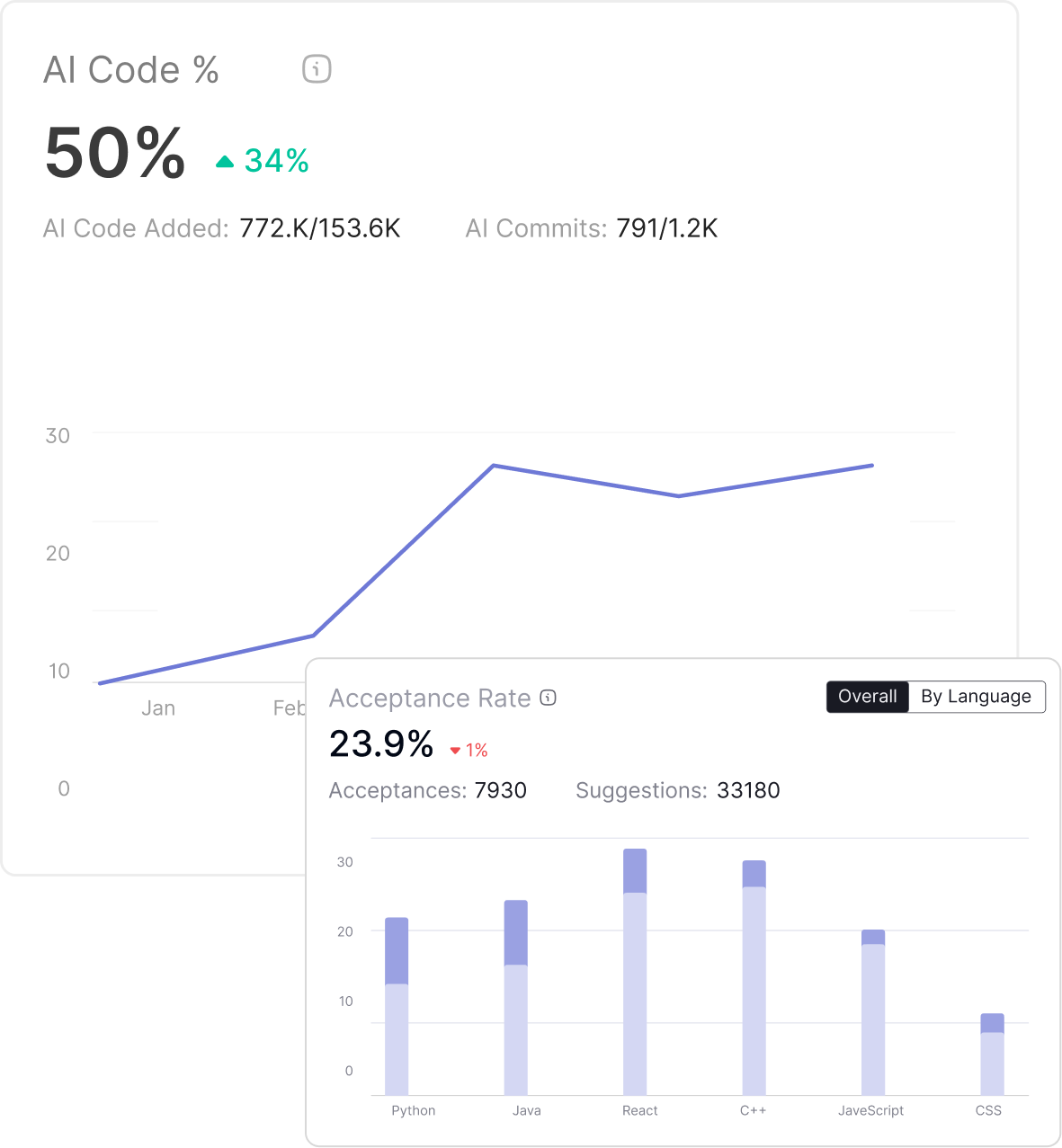
Swarmia measures delivery metrics and developer sentiment. It does not review pull requests.
Typo AI reviews code automatically using a semantic graph of your codebase - catching cross-service impact, API violations, and architectural regressions in both AI-generated and human-written code.
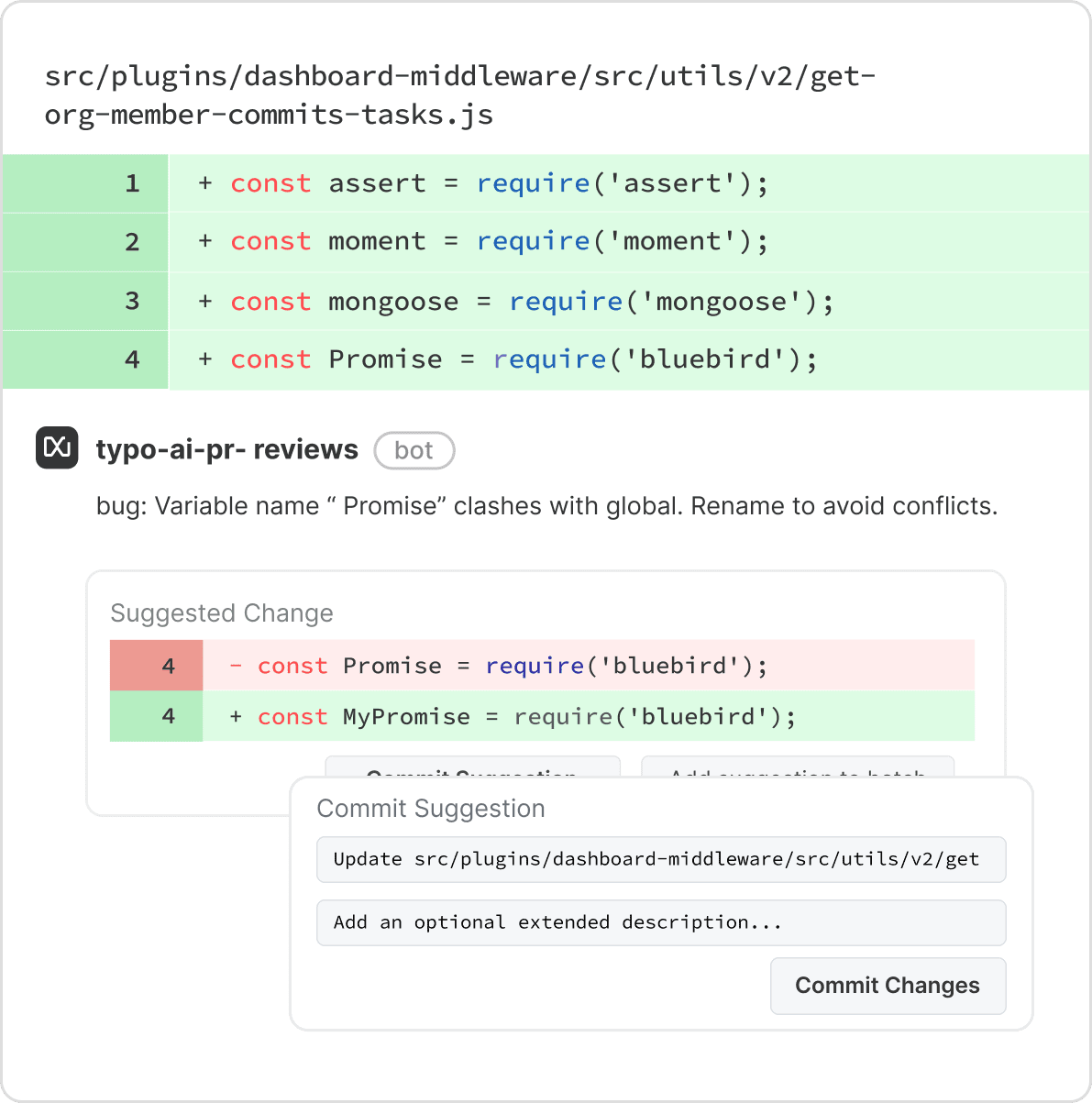
Swarmia's Signals feature flags workflow inefficiencies and suggests actions - useful for spotting that something's off.
Typo AI's reasoning agent goes further: when a metric moves, it runs root cause analysis on the underlying engineering data and identifies the specific bottleneck behind it, not just the fact that one exists.
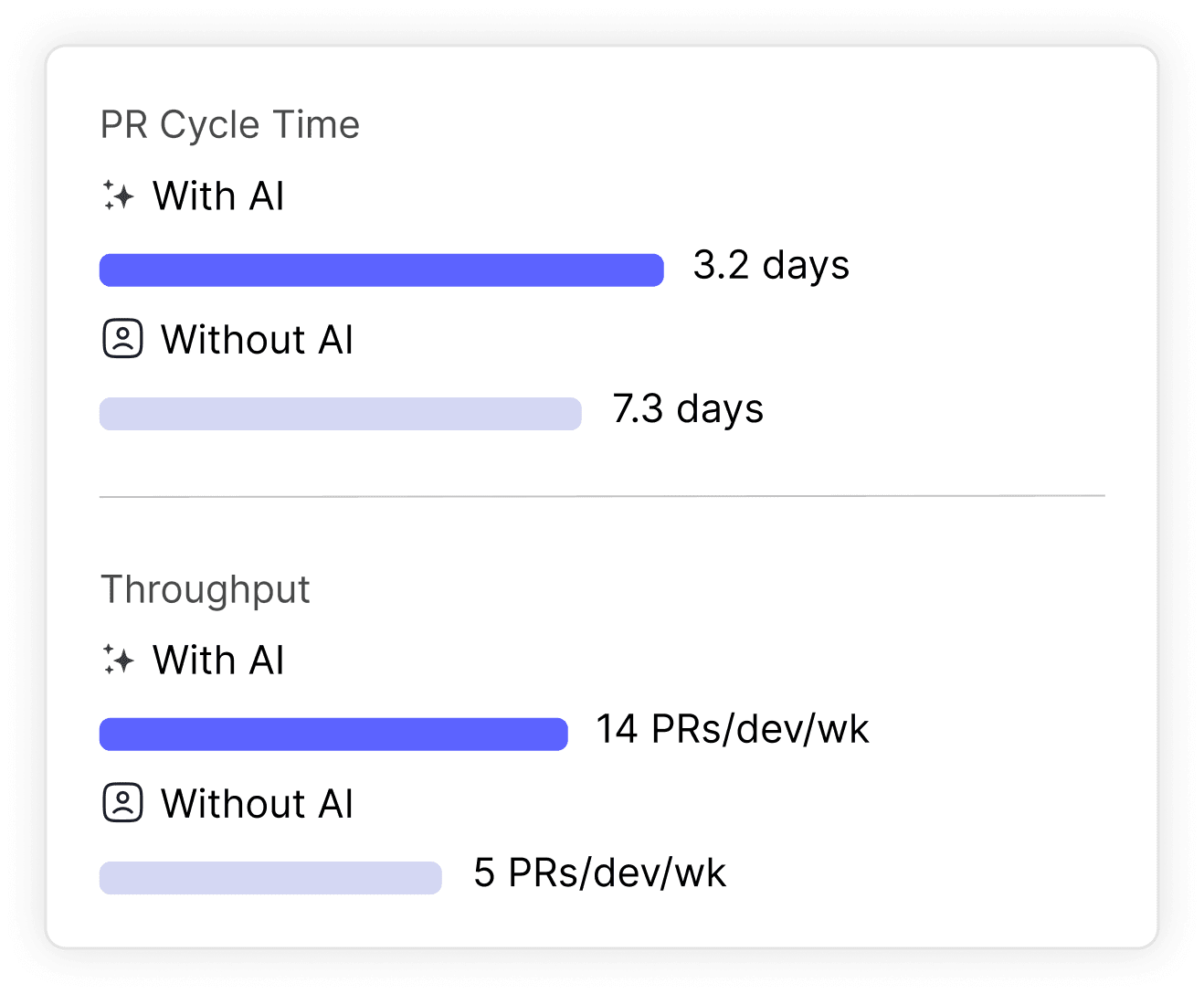

G2 Leader, Spring 2026.

Typo helps to track our team’s output and goals with its clean, user-friendly interface , and seamless integration with third-party tools. It offers automation, quick setup, and ongoing support for added convenience.

A very helpful, insightful tool for measuring developer productivity. Once set up, it’s great for understanding developer happiness and effectiveness. The metrics don’t feel like targets, but a way to spark healthy conversations - not pressure.

Typo AI helped us implement best development practices and reduce cycle time. The visibility across our SDLC changed how we run sprints.

Typo AI flags security vulnerabilities with built-in SAST as part of every code review, including code written by Copilot, Cursor, or Claude Code. Swarmia has no code review capability, so it can't inspect AI-generated code for vulnerabilities - only track that an AI tool was involved.
Yes - Typo Goals. Both let a team set a target for a metric and get automated alerts when performance drifts. Swarmia's working agreements are typically team-authored and reinforced through Slack reminders; Typo Goals are configured per team with built-in benchmarks and trigger goal-specific alerts automatically.
For engineering leaders looking for answers, not dashboards.